
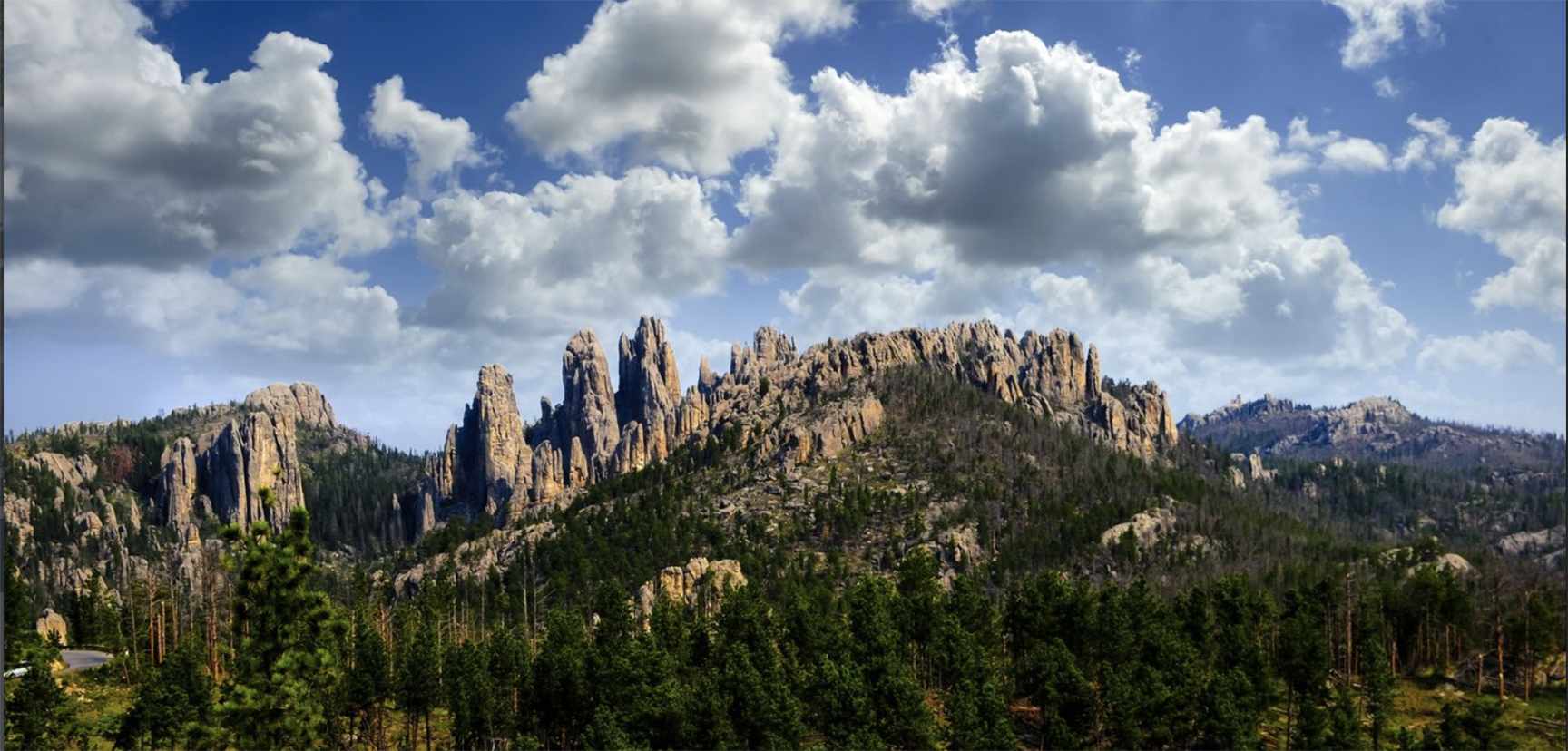
Mountain Goats of the Black Hills
The Great Escape: Legend of the Mountain Goats of the Black Hills
A century ago, six goats stepped out of captivity and into granite. They did what mountain goats do: they found the steepest ground and made it home. Their descendants still move across the Black Hills rock—proof that an unexpected beginning can become an enduring legacy.
Six Goats Tavern is built to honor that legacy in the way a community can: by gathering people, telling the true story, and turning admiration into action. When you dine here—when you raise a glass after a day in the Hills—you’re not only joining a table. You’re joining a century-long thread that runs from wild stone to warm light.
That is The Great Escape: not myth, not rumor, not marketing—history still alive on the cliffs above us, and a legacy worth protecting for the next hundred years.
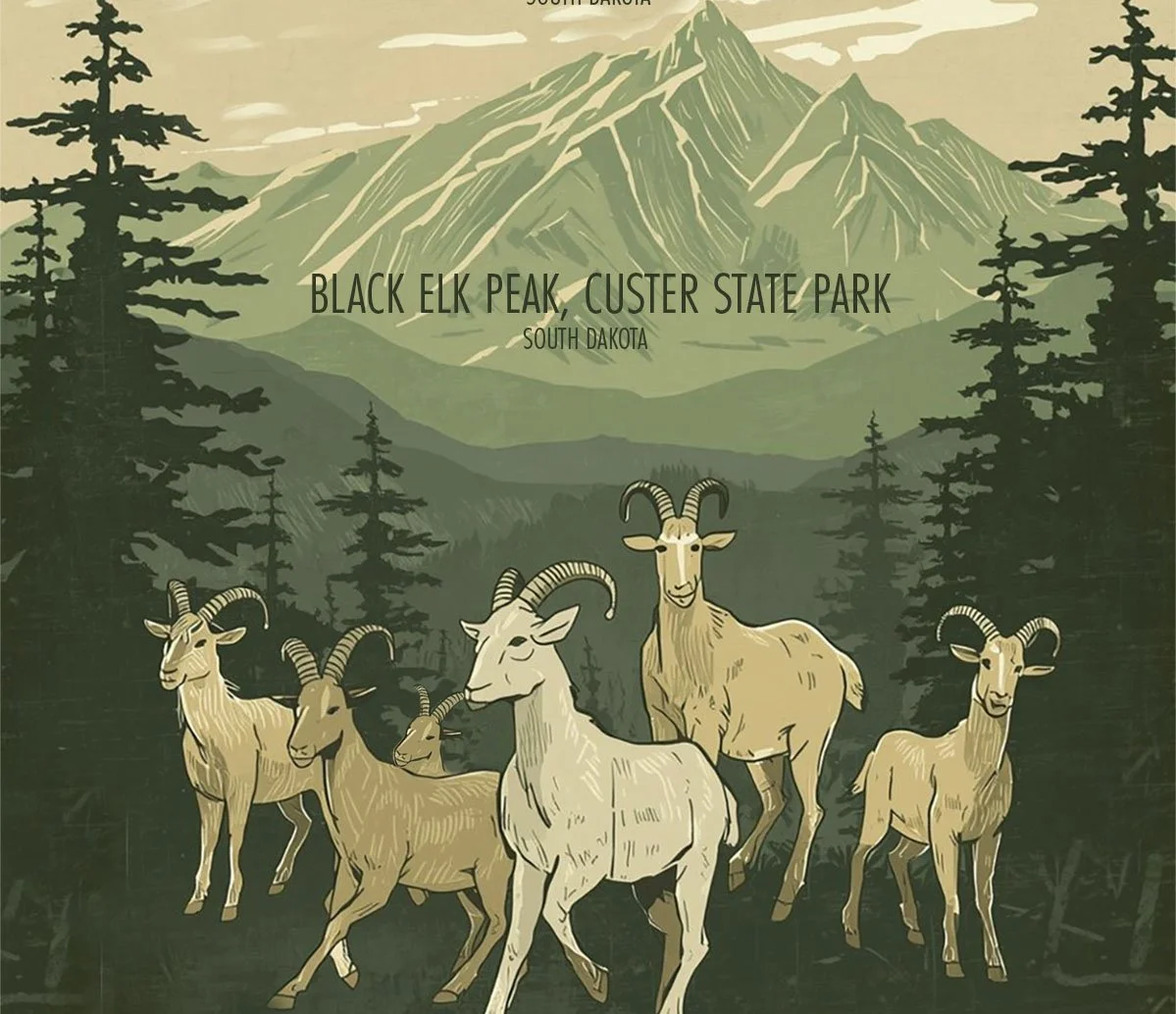
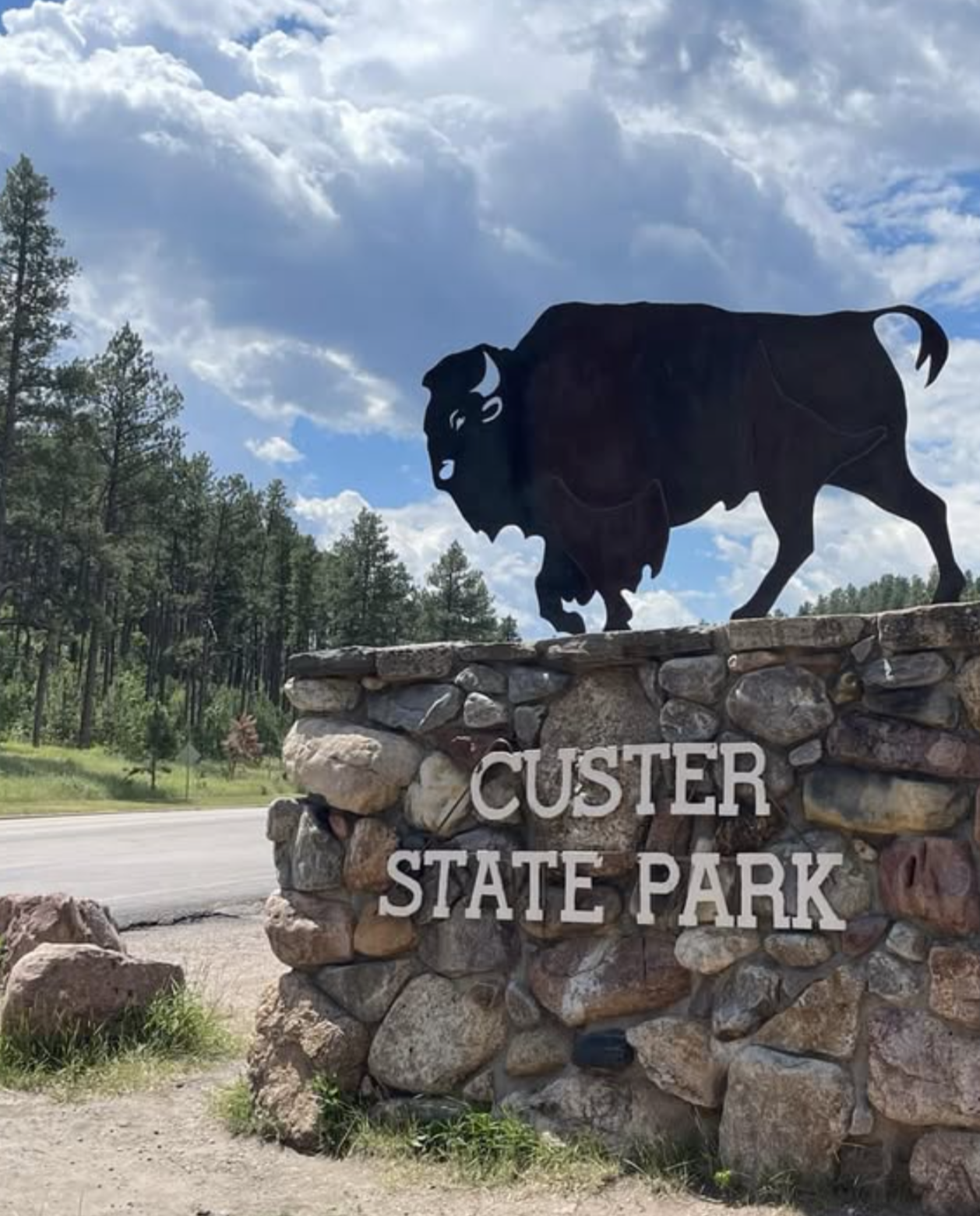
Visitors are often surprised to learn that the mountain goats seen on the granite faces of the Black Hills are not native to South Dakota. Today, they are a familiar sight near Mount Rushmore, Black Elk Peak, and throughout Custer State Park, but their presence here is the result of an unexpected chapter in the region’s history.
Rocky Mountain goats are naturally found in the high, rugged ranges of the western United States and Canada. Prior to the 1900s, they had no place in the Black Hills ecosystem.
During the early twentieth century, Custer State Park operated a small zoo intended to give visitors close views of wildlife. The collection included a variety of animals such as elk, deer, wolves, bobcats, bears, and even a moose brought from Yellowstone. In 1924, six mountain goats were brought from Alberta, Canada and placed in enclosures within the park.
That arrangement did not last long.
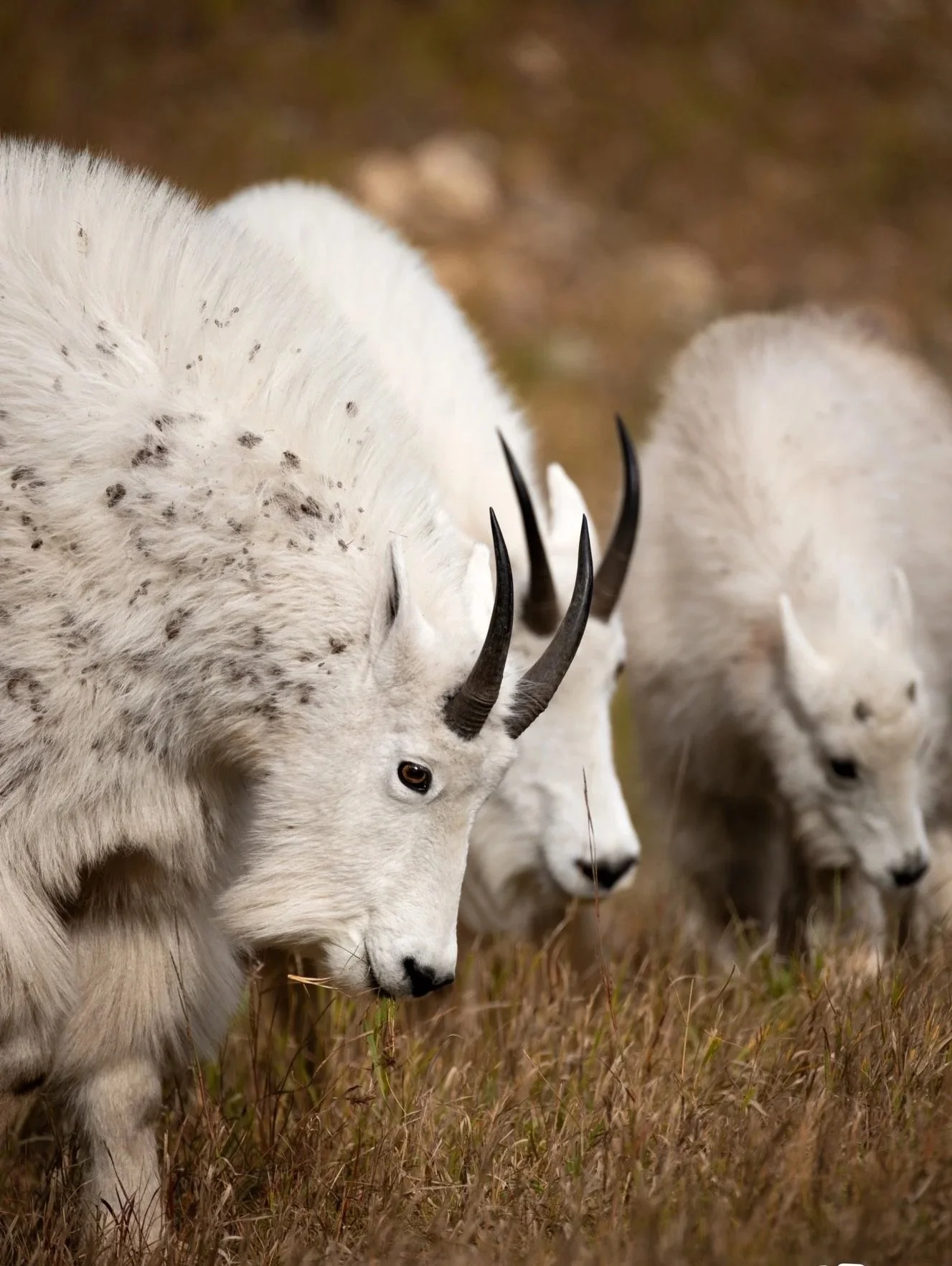
Photo: Calle Andrew Brown
As decades passed, wildlife managers began monitoring the herd more closely. Population levels fluctuated due to hunting, transplants, and natural pressures. To maintain genetic health, additional goats from Colorado and Utah were introduced into the herd in recent years, ensuring that the descendants of the original six continue to thrive.
Today, mountain goats can be seen throughout the higher elevations of the Black Hills—from Custer State Park and Mount Rushmore to the granite spires near Black Elk Peak and beyond. Their presence is the lasting result of a brief moment nearly a century ago when six animals stepped beyond a fence and into a landscape where they unexpectedly found a home.
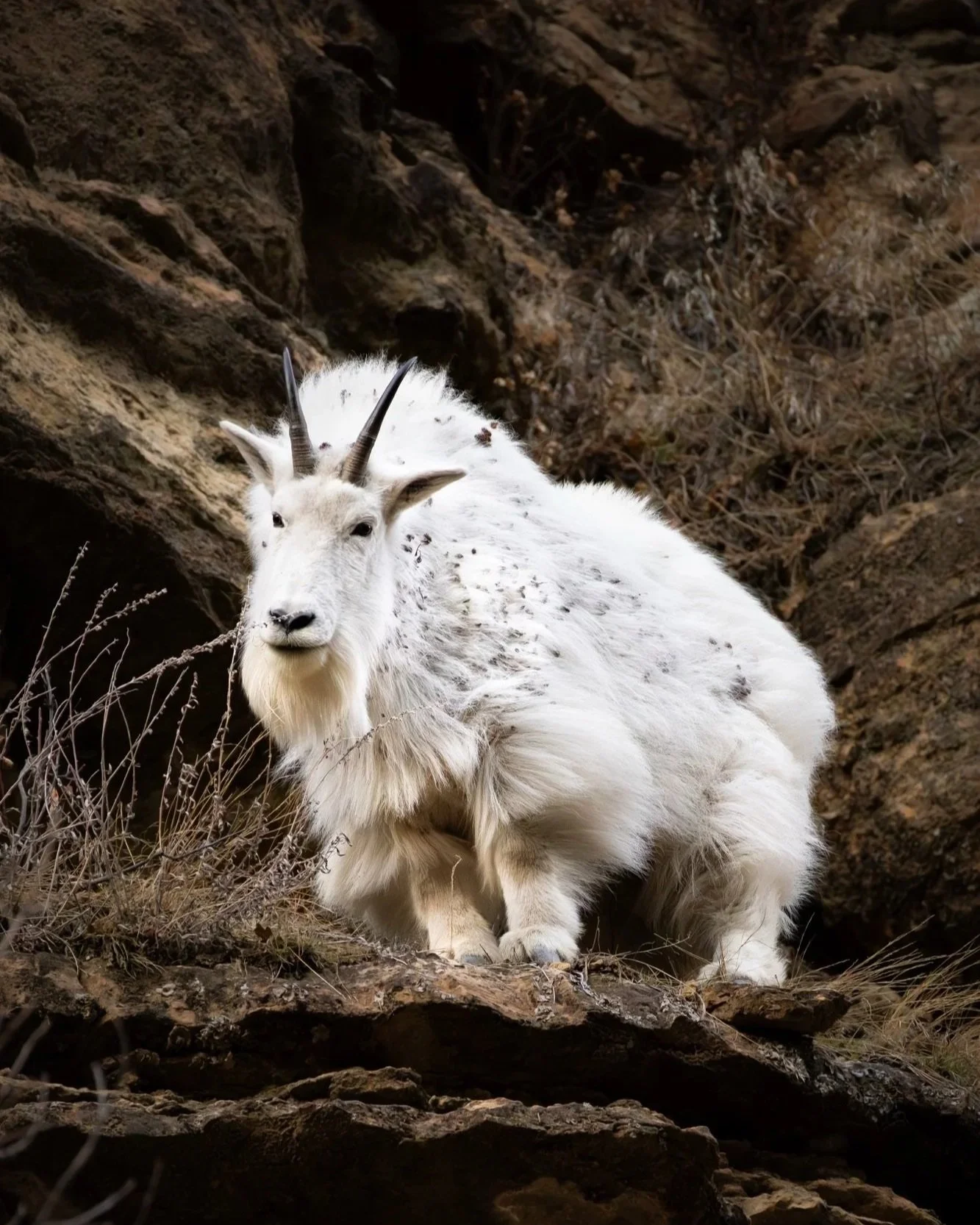
Photo: Calle Andrew Brown
Two of the goats escaped on the very first night. Over the next several years, the rest followed. By 1929, all six goats had disappeared into the surrounding hills. Unlike other escaped animals that were quickly recaptured, the goats were not found again. They had moved into the steep granite terrain around what is now known as Black Elk Peak, where the landscape closely matched the rocky habitats they were built to navigate.
The goats adapted quickly. With no natural predators suited for such terrain and an abundance of cliff faces for refuge, they established themselves successfully. By the mid-twentieth century, estimates suggested several hundred goats were living in this core area of the Black Hills.